Showing posts with label tipping. Show all posts

Sunday, February 24, 2019

What It Takes, Part 3 -- Epilogue: McEnroe Returns

Note: Best to read Parts 1 and 2 below before reading this one. 

Epilogue (noun) --  a section or speech at the end of a book or a play that serves as a comment on or a conclusion to what has happened. (the Apple dictionary)

I love epilogues, especially when one occurs in real life, as if life itself were a story. In the context of a ride in a taxi in a big city like New York, epilogues are rare indeed because in most cases you will never meet your passenger again.  So whatever you may have found to be interesting, or quirky, or disturbing about your passenger -- whatever the circumstance was --  it will remain unresolved in your mind.  You may occasionally find yourself wondering, "whatever became of so-and-so?"   You wish you could meet that person again just to find out or so you could satisfactorily end the story yourself.

I had an epilogue in my cab last year on April 22nd, a sunny Sunday with birds chirping and happy trees serenading the city with a concerto in the key of delicate green.
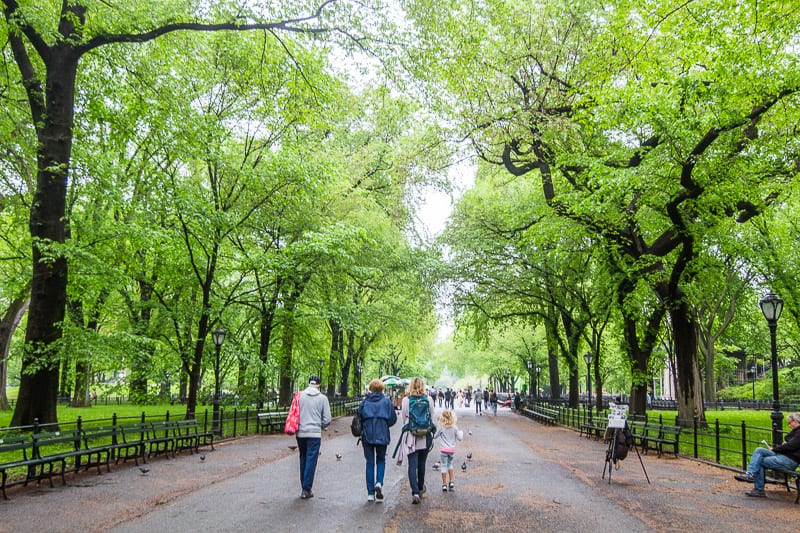


As I was waiting at a red light on Central Park West a bit before 4 p.m., the right rear door opened and a passenger jumped in.  Before I could say "hello" he barked, "59th and York and make it fly!"   Apparently he was in a big rush.

This kind of request is usually made in the form of a polite question, not a blunt command.  I looked in the rearview mirror to evaluate the situation.  In other words, why should I drive any faster than I  normally do?  Is this really an emergency?  I had one of those Nissan minivan cabs that day


which has a partition running the entire width of the cab.  One of the few things I like about this vehicle is that it allows the driver to fully view the passengers in the rear.  It also has an intercom that actually works, enabling the driver and passenger to hear each other.  So I was able to take a good look at this guy.

Hey, wait a minute -- he looked familiar.


Oh my God, it was McEnroe.  Again.  Much older.  After thirty-four years he has returned to me, the prodigal passenger.

"Mister McEnroe!" I exclaimed.

Big mistake.

If you recall from the second story in this series, the correct way to address John McEnroe is by referring to him by his last name only.  I should have remembered this and I immediately suffered the consequences of my blunder.

"WE DON'T HAVE TO TALK!" he screamed.

Now if this had been virtually anyone else in the world I would have tossed the guy out of my cab.  It's a dignity issue.  You can't allow people to talk to you that way unless, of course, they are drunk and much bigger than you.  But this was McEnroe. Actually, it was kind of charming.  I smiled as if he'd said, "Hello there, how are you?", which in his own way is sort of what he did.

I stepped lightly on the gas and we began moving downtown on Central Park West. His destination required me to make an almost immediate left turn onto the transverse which runs through the park at 65th Street.  It's the fastest route to the East Side.  But the transverse was closed due to a parade on 5th Avenue that day, so we had to cut over to Broadway, a detour.  McEnroe didn't take this lying down and began venting his rage at Mayor de Blasio, the tyrant who had no doubt orchestrated this outrage.  Ridiculous to get so upset, you say, but think about it. This is McEnroe.  Everyone knows how McEnroe feels about referees and mayors are pretty much the same as referees.  Right?

I realized there was no point in continuing on in that vein.  Instead, I said:

"Hey, do you remember what you were doing in the evening of March 13th, 1984?"

This non sequitur caught his attention.  He perked up and forgot about the mayor.

"I have no idea."

"You were in my cab.  I picked you up from your place on East End Avenue and took you to the Garden to a Knicks game.  We talked about sports.  I told you about the time I hit some balls with Martina Navratilova's coach."  

McEnroe's face lit up.  "I think I remember that ride!"

Well, that handled his don't-talk-to-me and his I'm-in-a-big-rush state of mind. Suddenly McEnroe was friendly, conversational, and in no particular hurry.  We began a rambling conversation about various subjects, one thing leading to another, as often happens in a lively exchange.  My long tenure as a taxi driver interested him and he asked me some questions about my more memorable rides.  One that I mentioned was the ride with a couple of Mafia hit men to Newark Airport.  That led to him telling me about a book he'd been reading at the time, I Hear You Paint Houses, which led to how much money Netflix was reportedly paying Martin Scorsese to direct the movie version.  And so on.

By the time we were about halfway to 59th and York I suddenly realized that I had the rarest of rare opportunities at hand.  And that this was really going to be fun.

Let me explain: in the last 34 years I have told the stories in Parts 1 and 2 of this series to countless passengers in my cab.  If the subject of tennis comes up, or if anything to do with what it takes to be the champion in a sport comes up, if time permits I will tell my passengers those two stories together.  First the story about how pleased I was with myself that I was able to hit the serve of Mike Estep, Martina Navratilova's coach.  Then the story about what McEnroe's response to me was, seven  months later, when I told him how pleased I was with myself that I could hit Mike Estep's serve:

"Well, Mike's never been known for his serve," McEnroe had said.

It burst my little bubble.

This always gets a laugh.  Then to make my point I really dig into McEnroe, putting emphasis on certain words.  I'll say: "here's a guy who is number ONE... in the WORLD!  NO ONE can beat him!  In the WORLD!  NO ONE!  But he's just a little concerned that maybe his TAXI DRIVER can hit his serve.  But then, oh, wait, it's okay.  It was only Mike Estep.  I'm safe."  

After a brief pause for more laughter I'll put the finishing touches on my speech:

"What we're looking at here is compulsive competitiveness of a magnitude that is borderline insane!  This guy is asylum bait.  He's surrounded by assassins.  Even his taxi driver, for God's sake, is a potential threat to his dominance in the world of tennis."

And the point I make is that this is what it takes to be Number One.

So -- the rarest of rare opportunities at hand was this: due to the high level of affinity that had been created between us by our free-flowing conversation, I knew I could now tell McEnroe the story I'd been telling passengers for 34 years about him to him.  Just the way I tell it.  In life this just never happens.

So I set him up.

As we hit some traffic on 57th Street, I asked him if he remembered what he'd said to me in 1984 about my tennis session with Martina's coach.  Of course he did not, so the door was open.  I started at the beginning with Mike Estep hailing me on 6th Avenue in August of 1983, how friendly he was, how he was telling me things about the men's tour he probably shouldn't be telling anyone, about how he always beats Martina in a real match, and so on, leading up to his invitation to come out onto the court so I could see what it's like to try to hit the serve of a pro, and then later observing the ferocity of Martina when she played him in a practice game for real.

Watching McEnroe in the mirror, it was clear that he was enjoying the story and I was in safe territory when the story became about him.  So I brought it on...

"...so it's seven months later, March 13th, 1984 to be exact..."

"...you're going to the Garden, you're in my cab, we're on the FDR Drive..."

"...I'm telling you how happy I was with myself that I was able to hit his serve..."

"...you move forward in your seat, a look of concern on your face..."

"...what was his name again? you ask..."

"...Mike Estep..."

"...you move back in your seat, all relieved..."

"...well, you know," you say, "Mike's never been known for his serve"...

I check in the mirror to see how McEnroe's responding.  He's loving it.  I continue, with emphasis:

"...it's 1984.  You're the Number ONE tennis player in the WORLD!  NO ONE can beat you!  In the WORLD!  NO ONE!  But you're just a little concerned that maybe your TAXI DRIVER can hit your serve!  But then, wait, it's okay, it's only Mike Estep.  I'm safe."

Looking again at McEnroe, I see he's just about doubled-over in laughter.  I move in for the kill.  In  mock exasperation, squealing:

"Mike's never been known for his serve?"

And then, the coup de grace, both middle fingers raised high in extended triumph:

"FUCK YOU!  FU-U-U-CK YO-U-U-U McENROE!"

Now he is doubled-over in laughter.  

I tell my passenger to go fuck himself and he loves it.  A great accomplishment for me, but I knew it wouldn't offend him.  Self-deprecation has always been one of McEnroe's sterling qualities -- his saving grace, actually.

A feeling of calm set in as the laughter subsided.  We rode in silence for half a minute or so, then  traffic for the 59th Street Bridge brought us to a complete stop at Park Avenue.  I told McEnroe I knew a cab driver trick to get around it and proceeded to turn one block south to 56th Street, which is always completely empty.  As we began to zip along at a decent pace, I remembered that in our previous ride back in '84 I had kind of set him up for giving me a big tip.  We now had only a couple of minutes before we'd arrive at his destination, but I realized it could be done again.

"You know, for many years you held the record for being the best celebrity tipper in my cab," I said.    

"Really!  Who broke it?"

"Leonardo di Caprio.  Back in 1997.  He wanted to know who was the best celebrity tipper I'd ever had in my cab and I said, 'believe it or not it was John McEnroe, who gave me double the meter.'  Then he said, 'well I'm gonna give you triple the meter.' And he did.  Pretty impressive, considering he was really just a kid at the time."

Looking at him in the mirror, I could see a certain look of concern appearing on his face which I'd seen before.  Remember, this is a man who suffers from Obsessive Competitive Syndrome.  

I continued:

"That record stood for 17 years until it was broken by Derek Jeter.  Jeter gave me quadruple the meter."

McEnroe was indeed concerned.  "What was Jeter like?" he asked.  "I've never met him."

I told him Jeter was as advertised -- friendly, funny, easy to talk to, unpretentious. 

We arrived at his destination, the Sutton East Tennis Club (of course!) at 59th and York.  The fare was $19.30 and  I could almost see the wheels turning in his mind -- "should I give this guy quintuple the meter?"  That would be almost $100.  Could he do it?  The title of Best Celebrity Tipper Of All Time was within his grasp -- again! -- and the tension was almost palpable. 

McEnroe, like most people these days, was paying with a credit card.  As the passenger is touching a screen in the back to enter the tip, the driver can watch on his own screen in the front to see what's happening.  McEnroe began tapping.  If this had been taking place in a stadium, the crowd would be hushed in nail-biting anticipation.  

Could he do it?

The numbers began coming up on my screen, ever so slowly, one digit at a time...  a five, then a zero, then a period and two more zeroes.  Fifty dollars.  A valiant effort, ladies and gentlemen, but, alas, not enough.  He had come up short.  So sad, really, to see Father Time catching up with them.  Even the great ones must fall eventually to his relentless pursuit.  

But wait!

Number of times what's on the meter is only one way of determining the winner. Simple quantity would be another, more accurate, means of awarding the trophy. Di Caprio's ride in 1997 had been a short one and triple the meter came to about fifteen dollars.  And Jeter's ride was also a short one, around $8 on the meter and he gave me two twenties.  A $32 tip.    

So actually McEnroe had done it!  After 34 years he had come back to reclaim his title -- the Best Celebrity Tipper of All Time In My Cab. 

Without question the greatest comeback in taxi history!


I immediately decided he should receive a trophy -- my book.  I always keep a copy handy on the dashboard should the need arise to show it to passengers and this was just such an occasion.  

Thanking him for his tip, I announced that I had something for him -- "because you're special!"  And I held it up for him to see.  I couldn't hand it to him because the partition in these Nissans is solid with no window, so I told him to come around to me to receive his prize.  While he was on his way I wrote an inscription: "To John McEnroe, Thanks for that double the meter in 1984!  Best wishes, Eugene Salomon."  
I handed him the book, we shook hands, and by the big smile on his face it seemed to me that he was as happy to receive it as he was when he'd been handed one of his many trophies for winning the U.S. Open.  

Although that could be something of an overstatement on my part. 


*********


I found myself basking in the afterglow of that ride as my day continued on.  While taking a break at one of the many Starbucks around the city I reviewed mentally what had transpired earlier.  By confronting and skillfully communicating with an angry passenger I had turned the ride into a pleasant experience for the both of us.  I had transformed "we don't have to talk" into a fifty dollar tip.  I had explained to the passenger the route I was taking and expertly navigated the city streets to get him there in the shortest possible time.  I was so able to get myself on his wavelength to the point that even saying "fuck you" to him was completely appropriate and appreciated.  And I had given him a book written by his own taxi driver, something that is not likely to happen to a passenger even once in a lifetime. Putting all modesty aside, that is what it takes to rise to the very top echelon of a subset of our culture called "taxi driver".


Thursday, October 04, 2018

What It Takes, Part 2 -- My (Verbal) Tennis Match With John McEnroe

You know, having a conversation is a lot like playing tennis.  A statement is made from one person to another, then it's responded to, tossed around, back and forth, each person trying to make his or her "point", each trying to "score".  This can be obvious, as in a debate, or it can be subtle, as in a friendly dialogue.  To some people, even saying "hello" can be an attempt at making a score before your opponent does.  That's how it was in the evening of March 13, 1984, when I looked in my rearview mirror and found that John McEnroe was sitting in the back seat of my cab.  

It was the doorman of his high-rise on East End Avenue who'd hailed me and opened the door for him but since I'd been looking down at my trip sheet, filling in the required information, I hadn't yet noticed who my new passenger was.  I simply called out my usual "hello" and awaited the response.  Would this one be friendly, in a big rush, arrogant, a drunk, a serial killer, or what?  McEnroe's response was a hard, direct shot, you might say, to my forehand.

"The Garden," he said.

Now, what was most important here was what wasn't said.  He didn't say "hello" back to me.  He didn't say "please".  He didn't say "Madison Square".  Just "the Garden", as if I automatically knew who he was and which garden he was talking about. It was more of an order than a request and at the same time it tested the ability of the recipient (me) to respond in kind.  An excellent opening -- I didn't yet know who he was, but he'd already scored.  Point, McEnroe.

I looked straight into the rearview mirror, wondering who would be speaking to me this way.  I recognized him immediately and shot back my own gut response:

"McEnroe," I blurted out, showing surprise but no great enthusiasm.

I give myself a point here because: a) I returned his sharp opening with one of my own.  If he had intended to be blunt with no mincing of words, he got the same from me.  b) I didn't show any false respect or false adulation or false friendliness. It was just "McEnroe", not "Mr. McEnroe", or "Oh, John McEnroe!"  Basically I was conveying an attitude that said, Okay, I know who you are, but you're not on a tennis court, buddy, you're sitting in my cab, so don't start up with any of those shenanigans you're famous for.  I can hit your serve.  Point, Salomon.

The Precise Moment of John McEnroe's Fall from Greatness | Mockingbird

His return caught me off guard.  "Yes, it's me," he said, more to himself than to me and barely loud enough to be heard.

Now this was a switch, a complete change of style.  His words could be interpreted as "Yes, the Great One is in your presence," but his tone was self-deprecating.  Here was John McEnroe in person poking fun at John McEnroe the celebrity, actually satirizing himself.  It was an impressive display of flexibility as a conversationalist. Point, McEnroe.

We volleyed as we headed south on East End Avenue.

"Are you playing tonight?" I asked, thinking maybe there was a tennis match at the Garden.  No, he said, he was going to a Knicks game.

"Take the Drive?" I asked.  (Meaning the FDR Drive, the highway that runs along the east side of Manhattan.)

"Yeah, please."

"Who are the Knicks playing tonight?"

"The Suns."

A couple more easy lobs were exchanged with no points scored.

Then, fearing the conversation might peter out for lack of fuel, I changed tempo by employing a technique I've used on other celebrities.  I express my regrets that I'm not all that familiar with their area of expertise (even if I am) because here would be a great opportunity for me to learn something from someone so renown in that field.  Celebrities live lives of annoyance from mundane questions posed by strangers and this may cause them to be reluctant to engage.  So by pleading ignorance (or even pretending you don't recognize them) it has the effect of putting them at ease.

"Too bad I don't really know that much about tennis," I kind-of-lied as I made a left on 79th Street and approached the entrance to the Drive,  "or I might be able to hold down an intelligent conversation here.  I mean, I play a little, but I don't really know the fine points of the game."

Looking in the mirror, I watched his facial expression loosen up just a notch.  I edged into the opening I had created.  "Funny," I said, "I seem to keep getting professional tennis players in my cab."

McEnroe was interested.  "Really?  Who?"

I could feel a big score coming up.  Here was the famous John McEnroe showing an interest in the not-famous me.  To hell with modesty, a surge of what let's call self-importance was rising from within and it felt good.

I told him about a couple of fares I'd had with tennis players whose names I didn't remember.  After talking for half a minute, however, I realized I was getting too chatty and that McEnroe's interest was waning.  So I served him up my big story ("What It Takes, Part 1") about how the previous summer I'd driven Mike Estep, Martina Navratilova's coach, out to a private club in Queens to practice with her; how Mike was such a great guy; how he'd asked me if I'd like to watch them practice; how I'd always wondered if I could return the serve of a pro, so I asked Mike if he'd hit me a few balls when we got there; and how -- isn't this great? -- he did.

McEnroe was all ears.  Not to brag but, really, I had the guy in the palm of my hand.

"Could you hit it?" he asked.

John McEnroe, the number one tennis player in the world, wants to know about my tennis game.  Yes!  Point, Salomon!

"Yeah," I said and, not trying to disguise my pride, I told him how I'd actually been able to get my racquet -- actually, Martina's racquet, ha-ha -- on the ball.  Not with any authority, mind you, but still, after a few serves I was getting my timing down and I could hit it.  Not bad for an amateur, huh?

McEnroe moved forward, a concerned look on his face.

"Who was that again?"

"Mike Estep," said I.

"Oh," he said, and he moved comfortably back in his seat again.  "Well, you know, Mike's never been known for his serve."

Ping!

The little bubble I'd been sitting in for the last seven months came bursting apart and evaporated into the atmosphere.

"Mike's never been known for his serve."

With one quick stroke I'd been reduced to the pathetic little tennis wannabe I actually was.

Point, set, match -- McEnroe.  

Damn!

I made a right and got on the FDR Drive.  Having been so profoundly reduced in stature, I found I could think of nothing to say to McEnroe so I just reverted to my job description as a New York City taxi driver and stepped on the gas.  Soon we were barreling along at 50 miles per hour in the middle lane, and for the next half a minute there continued to be no conversation between us, McEnroe no doubt quietly savoring the conquest of my dignity.  Understandably my mood began taking a turn toward the Dark Side.  What good was living, anyway?  There's always some venomous creature waiting to put its fangs into you just when life seems all zippity-do-dah.  Why continue slogging on with it?  

The idea of an end-it-all-with-a-glorious-bang entered my mind.  I could unfasten my seat belt, pick up speed to about 100 miles per hour, and crash into the stone wall that runs alongside the highway. McEnroe hadn't fastened his own seat belt so he'd probably go flying into the East River. This concept had an element of poetic justice to it which I found very appealing.  Mike's never been known for his serve, huh? We'll see about that.  I moved the cab over into the right lane and started looking for a good place in the wall to crash the cab.


But then, wait.  I reconsidered.

All right, one way of looking at it would be that I had been demolished, even humiliated, by McEnroe. But let's take a step back and delve into this a bit, shall we?  Here's a guy who is ranked NUMBER ONE in the WORLD.  There are MILLIONS of tennis players, ALL OVER THE WORLD.  They play this sport in schools, in colleges, in leagues, in private clubs, or just with friends.  If you're GREAT at it you may actually become a professional and make some kind of a living at it.  But then you're up against all the other players from ALL OVER THE WORLD who are also GREAT. Nevertheless you may become an elite player, rise high in the rankings, and become famous, respected, and wealthy.  But if you're the GREATEST OF THE GREAT -- if you are ranked NUMBER ONE IN THE WORLD -- you will have earned the AWE of both the general public and your own colleagues because NO ONE IN THE WORLD CAN BEAT YOU!  NO ONE!

And yet John McEnroe, the best tennis player in the world, and, some might say, the best tennis player of all time, is concerned that maybe his taxi driver can hit his serve.  But then, oh, it's okay.  It was only Mike Estep.  I'm safe.

Ladies and gentlemen, what we're looking at here is compulsive competitiveness of asylum magnitude and I suppose we're also looking at what it takes to be Number One in tennis and some other sports.  He is surrounded by assassins.  Everyone is a threat.  This is a guy who is one referee's bad call away from being surrounded by men in white coats and whisked off to the happy farm.

No, I decided, I would not crash the cab into the stone wall that runs alongside the FDR Drive.  In an act of considerable magnanimity,  I would let McEnroe live.  I realized he hadn't won the match, he'd only won a set.  So the game was still on.  But what I needed to do here was to clarify for myself what the object of the game we were playing actually was.  

I thought about it.   For him, I realized, it was to shape me into a dutiful listener so he could hear himself pontificate.  But for me, the game, in the time-honored tradition of taxi-driving, was to set my passenger up for giving me a big tip.

I awarded myself a point for this brilliant insight and the match continued.

Easing up on the pedal, I steered the cab back into the center lane.  Our conversation resumed, turning to sports in general -- football, baseball, hockey, basketball.  I began to notice that he'd listen carefully to whatever I had to say, wait just a moment, and then correct me.  My strategy was to listen carefully to him as well, but not to correct him.  For example, when at one point he interjected into the conversation that tennis is the greatest sport that ever was, I didn't contradict him even though everybody knows that baseball is the greatest sport that ever was.  Agreement creates affinity and affinity is crucial in the tipping phase of the ride.  So it could have appeared to an observer that McEnroe was scoring all the points here, but in reality I was holding even with him.

We exited the FDR at 34th Street.  The conversation had turned to boxing and McEnroe was telling me that Larry Holmes, who was then the undefeated heavyweight champion, would soon lose.

"Who'll beat him?" I asked.

"He'll beat himself," McEnroe snapped back.  A return with some real zing to it, especially considering that the person giving it was himself was the champion of the tennis world at that time, and McEnroe received a point for style.

We moved along on 34th Street and as we approached 2nd Avenue McEnroe committed a breach of taxicab etiquette by telling me to turn left and take 31st Street to the Garden.   The offense here is giving simple directions to a professional driver, as if I don't know how to get to Madison Square Garden.  But in this case I let the faux pas pass without comment as it suited my game plan.  The street he chose is actually the slowest way to get to the Garden from the East Side because you'll get a red light at every intersection.  He was adding three minutes to the ride. That's good for the meter but what I liked most was that it was giving me more time to work him for the tip.  Advantage, Salomon.

As we began our crosstown trek on 31st Street McEnroe, perhaps realizing that the end of the ride was approaching, suddenly seized complete control of the conversation and began to preach in earnest about his issues with tennis.  This was good news.  I could be getting taxi-driver-as-therapist money here.


First he hit on the officiating.  His complaint, he said, was that the officials aren't professional officials.  He pointed out that in baseball and football the players get to know the officials on a first-name basis.  In a close call their decisions are respected because the players know they are competent.  But in tennis, he said, you see new faces in every tournament, officials you've never met before.  Trust in their competence isn't given a chance to develop. 


FLASHBACK: John McEnroe calls umpire 'moron' at Queen's Club | Belfast News  Letter


I thought, wow, you know, he makes a good point here, and I awarded him one.  I'd never heard that argument expressed before and it made perfect sense -- of course, a lack of trust in the professionalism of the officials would create problems with the players.  But a few moments later I realized, wait, this is McEnroe's justification for why it's okay to berate officials during a match, as he was so famous for doing.  I took the point away for faking himself out.


Next, he took on the fans.  "New York fans are the worst," he squawked, recalling when he'd played against Vitas Gerulaitis, who was from Queens, in the finals of the U.S. Open in 1979.  What are the odds, he asked, of two guys who are both from Queens ever making it to the finals of the U.S. Open, played in Queens, in the same year?  And the fans?

"They booed both of us!"

Now here McEnroe was clearly committing a foul.  It would be one thing if he had it out for one particular fan or for even a certain type of fan.  But all New York fans? Come on.  I had no choice but to deduct a point for unsportsmanlike conduct.

We arrived at the Garden.  I pulled up to a special side entrance on 31st Street where McEnroe wanted to be dropped off, stopped the cab, and started tallying up the points.  With the penalty point deducted from his score it appeared to be a dead heat.  So... this match was going to be decided by the tip.  The fare on the meter was $5.20.  (This was in 1984. Today that ride would cost around $15.)  A cheap or -- considering it's a celebrity -- even an average tip would force me to conclude that my efforts had been in vain and I would have to concede the match to my opponent.  It would have to be a definitive, excessively generous gratuity to win.

With tension mounting, McEnroe opened his door and stepped out onto the street. He reached into the pocket of his coat and, stepping halfway back into the cab, handed me two bills: a five and a single.  It was going to be an eighty-cent tip, slightly less than average for a $5.20 fare.  I would have to interpret this as a snub, a cheapskate's ace, and give the final point and the match to McEnroe.

But wait!

McEnroe reached into his pocket again.  Out came several more bills which he handed to me with an almost apologetic look on his face.  He closed the door, waved goodbye, and walked toward the Garden, smiling.  I counted the bills.  There were six singles.  So McEnroe had tipped me $6.80 on a $5.20 fare, better than double the meter.  It was the best tip I'd ever received from a celebrity, a record that stood for twelve years.

Point, set, match -- Salomon!


********


Notes:

1. This is the second in a three-part series, "What It Takes".  Stay tuned for Part 3, "McEnroe Returns".

2. I am able to recall the details of a ride taken 34 years ago is because a) it was particularly memorable, and b) I've always kept journals of my most interesting rides.

3. There's a documentary recently released about McEnroe's year, 1984 (the same year he was in my cab), in which he won an incredible 82 out of 85 matches.  To see a clip from In The Realm Of Perfection click below:


4. Click on this one to see a taxi nearly running over McEnroe (from the movie Mr. Deeds):


Sunday, January 25, 2015

The One Good Thing That Happened To Taxi Drivers After Uber Invaded New York City

Passengers in my cab are always surprised when I tell them there is no taxi drivers’ union in New York City. It is assumed that with all these cabs everywhere you look there must certainly be a union, but there is not. There is a taxi drivers’ advocacy group, the Taxi Workers Alliance, whose leader, Bhairavi Desai, often appears in the media and at meetings of the Taxi and Limousine Commission to try to present the viewpoint of the drivers, but the Taxi Workers Alliance has no clout. This was painfully evident in September of 2007 when Ms. Desai called for a two-day work stoppage to protest the imposition of the high-tech “system” (GPS monitoring, credit card readers, and back seat television screens) upon the taxi industry in New York City. Her call was widely ignored by the drivers who instead opted to avail themselves of the inducement of Mayor Michael Bloomberg to pay her no mind and instead make a bundle on those days because he was allowing drivers to accept multiple passengers and charge by zones.

Although I did observe the work stoppage myself, I was not at all surprised that it fell on its face. The template upon which the taxi industry in New York operates was conceived in 1937, a time of enormous labor unrest in the United States. Intentionally or not, it has turned out to be union-proof. The number of yellow cab medallions was fixed at 11,787; about half of them were owned by numerous taxi fleets scattered around the city and the other half by independent owner-drivers, one taxi for each owner-driver. So with dozens of taxi garages and thousands of independent drivers scattered all over the city, there was no central location where drivers would ever congregate and no place to put a picket line. Attempts to unionize failed and, boy, the weakness that was the result of that failure has been evident ever since.

Just compare the difference in the way taxi drivers and members of the Transit Workers Union (subways and buses) are dealt with by the city when a strike, or even a temporary work stoppage, is threatened. Mayor Bloomberg, as mentioned, simply bribed the taxi drivers to continue working on those two days. In May of 1998 there actually was a one-day work stoppage by taxi drivers, a labor miracle engineered by Ms. Desai, in response to Mayor Guiliani’s sudden imposition of unpopular new rules upon the industry. For that one remarkable day there were virtually no yellow cabs on the streets of the city. The mayor went on television that evening and with a smile on his face said, “The streets were nice and empty today. They should do it more often.” He refused to negotiate and then for the next two years taxi drivers were continuously being pulled over by the police and ticketed for such offenses as wearing sandals or having an entry missing from their trip sheets. Some felt this was not a coincidence.

But should the president of the Transit Workers Union even be overheard at the gym using the word “deadline” in regard to the expiration of contracts with the city, the attitude from the mayor’s office is along the lines of, “Come on over, we can work it out, let’s do lunch.” Negotiations are conducted and deals are made. Why? Because the TWU is a very strong union - it can call a strike for real and cause great trouble not only for the citizens of the city but for the mayor, who will be blamed for letting it happen. That is clout. That is leverage. That is what taxi drivers have never had.

As a result they have been taken utterly for granted by owners of taxi fleets and city officials alike. Due to a steady influx of immigrant labor, garage owners have never had to particularly worry about not having enough cabbies to drive their vehicles, regardless of the working conditions these drivers were required to tolerate. And any newly-elected mayor or recently-appointed Taxi and Limousine Commission chairman soon learned that they can impose any rules they want on taxi drivers and there will be no meaningful opposition to their decrees.

The examples of this could fill a book (hey, there’s an idea!) but I’m going to give you just three, to illustrate the point.

1) After the recession hit in 2008, taxi garages were overflowing with drivers looking for work. Since it’s more convenient and more profitable for fleet owners to lease their cabs out on a weekly, rather than a daily basis, drivers were told they had no choice but to take the weekly deal. This meant a six-day work week for either a day shift (5 a.m. to 5 p.m.) or a night shift (5 p.m. to 5 a.m.). Should a personal situation or an illness or a Hurricane Sandy come along and you needed a few days off, tough, you still had to pay the full weekly lease if you wanted to continue to drive one of that fleet’s cabs.

2) The high-tech “system” was mandated by the Bloomberg administration to be in use in all taxis in January of 2008. It consists of three components: credit card readers, GPS tracking, and a television monitor in the back seat. I will leave the pros and cons of the credit card readers and the GPS tracking for another day - let’s just talk about the television monitor. Here is a glittering example, the gold standard, if you will, of just how taken for granted the taxi drivers have been. When you sit down in the back seat of a New York taxicab, a TV monitor is staring you in the face. When the driver turns on the meter it activates the TV and the canned entertainment begins. Of late this consists of clips taken from talk shows, interspersed with commercials and public-service announcements. What this means to the taxi driver is that for approximately sixty-five percent of his twelve-hour shift (the average percentage of time the meter is on) he will be forced to endure listening to the same jokes and babble over and over and over and over again. Was any kind of survey ever done of how the drivers felt about this? Of course not. Are the drivers even given a piece of the advertising revenue the Taxi TV generates? Uh, why even ask?

Aside from all this, there is a safety issue, as well. The monitor is about twenty-four inches from the driver’s head, so the noise it emits is inescapable. And to make it worse, the volume can be turned up to make it suddenly BLASTING with a quick tap-tap-tap of the passenger’s finger. Now, quite aside from the obvious annoyance this would be to the person who has to put up with it for two-thirds of his or her work day, has it occurred to no one that it is also a distraction to the driver and it therefore makes a ride in a taxi less safe than it would be if the thing simply wasn’t there at all? If anyone would dispute that point, I would invite them to answer this question: how would you like it if that monitor was twenty-four inches behind the head of your airline pilot as he’s bringing your plane in for a landing? Do you think that would be approved by the FAA? Of course not! But in a taxi, it’s okay?

3) And then there is the Nissan NV200 minivan, the so-called “Taxi of Tomorrow”. Forget about the fact that the car is not a hybrid. Forget about the peculiar and troubling deal that Mayor Bloomberg entered the city into which squelches competition in the marketplace by awarding Nissan an exclusive ten-year contract to be the sole manufacturer of all taxicabs in New York City. Let’s just talk about the feature of this vehicle which makes it so horrible that I told the manager of my garage, after driving it for only two shifts, that if he had no other types of cabs to offer me, I will quit: it comes from the manufacturer with a solid Plexiglas partition which cannot be opened. Why is this so bad? Because, although there is an intercom which permits a sentence or two to come through, it nevertheless reduces the chance of an actual conversation between the passenger and the driver to nearly zero. Like hair salons and bars, the taxicab is a business setting in which there is a potential for real human contact. For a driver like myself, this is the essence of the job, and for many New Yorkers - and for nearly all tourists - contact with taxi drivers is an important part of the “New York experience”. The partition which cannot be opened kills that, and it kills tips, too, as a consequence of the enforced disconnection from the driver.

So into this environment enters Uber, the new kid in town. After some initial wrangling the dust settles down and Uber creates a foothold in the taxi community. Its popularity with customers grows. The owners of car services are very worried because the Uber business model of getting a taxi via an app is superior to having to call for one on the phone and wait for it to show up, if it shows up at all. But the fleet owners of the yellow cabs are not worried because the business model of going out on the street and waving your hand is still superior, or at least as good as, ordering a cab via an app. So even with Uber in town, business was going along as usual… until last summer.

That’s when things began to change. And this was the huge, unforeseen consequence which is turning the New York taxi industry upside down: the drivers of the yellow cabs began to defect to Uber. Like weary soldiers who disappear from their units in the middle of the night, the drivers are deserting the fleets, and there is no sign at this point that they will be coming back. At my own garage at least twenty-five percent of the fleet’s two hundred taxis have been standing empty on most days since July.

This is a disaster scenario for the garage owners. It is quite an expensive operation to keep a fleet of taxis on the streets of New York. The owners' only source of revenue is what they receive from the leasing fees of drivers, so if too many cabs stand empty for too long, the fleet owners will be facing bankruptcy. And to make matters worse, the medallion, which had been trading in the vicinity of a million dollars, is in free-fall. It has lost over twenty percent of its value since the drivers began to shift to Uber, and right now it would be difficult, if not impossible, to sell one because potential buyers as well as lenders are shying away. There is no longer confidence in what the future may hold for the value of the medallion nor does anyone know what the bottom will be. This means that even if a fleet owner wanted to liquidate some of his medallions to help cover expenses while he rides the crisis out, he cannot. And the city, too, has suffered. The sale of 2,000 new medallions, which was included in Mayor Bloomberg’s final budget and was expected to bring in a billion dollars, has been suspended indefinitely.

What does this all mean for the drivers of the yellow cabs? It means hallelujah, leverage has arrived at last. It has arrived not through feeble threats of strikes or work stoppages, but through competition for the services of drivers. Now, for the first time ever, fleet owners and city officials will have no choice but to give serious consideration to how their actions affect the lives of the drivers. If they are wise, they will realize it’s not only a matter of whether or not a cabbie can make more money driving for Uber, although that is, of course, an important issue. It’s also about the working conditions of the drivers - the twelve-hour shifts, the six-day work week, the Taxi TV, the removal of choice in the vehicles they can drive, and so on.

Hey, Taxi and Limousine Commission - do you want the drivers to return?

How about doing some surveys?

Find out what's really needed and wanted from the drivers.

And then give them some good reasons to come back.

Wednesday, August 07, 2013

The Card Game

“There was something in the air that night.”

Looking back at it later, that’s the way it seemed.

Someone less familiar with the nuances of a scene - its details, the usual flow of its particles - might not have noticed that something was not right.

But I did. Something, some nebulous something, was out there.

I sensed it at the beginning. I even took action to avoid it, but it happened anyway. Later I concluded that it had all been a karmic phenomenon, like a greeting card from Fate, a scene in a movie in which you sidestep your way around the danger, you even compliment yourself on having been sharp enough to have avoided it, and then, as you open the door to your house, it’s sitting there in your kitchen eating a tangerine. “Hello.”

It happened on a midsummer night last year, July 31st to be exact - around midnight - and that’s about as midsummer as you can get. I took a twenty-something female from lower Manhattan to McDonough Street in the Bedford Stuyvesant section of Brooklyn, a so-called “inner city” part of New York. She was fine, paid with a credit card and gave me a twenty percent tip. But there was a little thing that happened a few blocks before we got to her destination that caught my eye. While we were stopped at a red light a group of about twenty kids, teenagers in that danger-zone between fifteen to twenty years old, walked by on the opposite side of the street. It was the way they were moving, along with a group attitude and a certain buzzing among them, that created the blip on my radar screen. I’ve been watching people walk across the street for thirty-five years. This was a particle that was not flowing smoothly. It was sticking.

Have you ever heard of something called a “wilding”? It’s defined as “the activity of a gang of youths going on a protracted and violent rampage in a public place, attacking or mugging people at random”. I saw one in action a couple of years ago, not far from Times Square. It’s an internet phenomenon made possible by the anti-social media, and it’s very scary. Could it have been that what had caught my attention was a prelude to a wilding? Probably not, wildings are rare, fortunately.

But then, as my passenger departed on McDonough Street, I heard sirens from a few blocks away. They have a language of their own, these sirens. Police, fire, EMS, they’re all slightly different. These were police, I knew, and in the parlance of police sirens they were in the “we mean business” band. (You can tell this by the duration of the wailing and by the speed the police car is traveling which, even if you can’t see it, can be determined by the time it takes for the siren to increase in volume if it’s moving toward you or to decrease in volume if it’s moving away from you. It also lets you know how serious they think the emergency is.) That there was more than one siren was significant, as well. There were two, about a block from each other, and moving in the same direction. Then there was a third, this one from a bit further away.

Something was going on.

Then I heard distant shouts, coming from that same vicinity. And not from one source, but from two or three.

My sacred Taxi Driver Instinct told me, quite clearly, “get the hell out of here”. I flicked on my “Off Duty” light, locked the doors, and began heading back toward Manhattan, the opposite direction from where the commotion, whatever it was, was originating.

But then, just as I was beginning to breathe easier, Temptation appeared in the form of a person approaching from the street. No, not a woman in a red dress. Temptation appeared, oddly enough, in the form of a middle-aged, thuggish-looking man who might have been the guy the song “Bad, Bad, Leroy Brown” was written about. He would have been the last person you would have thought I would allow into my cab at this particular moment, but he came up to my window and said the magic words.

“Take me to Manhattan?”

It was free money. I unlocked the doors and he slid onto the back seat.

“Where in Manhattan do you want to go?”

“Chinatown.”

Perfect. Right across the Manhattan Bridge.

I turned the meter on and thought about what I had just done. It was all right. This guy, although a rough kind of character, represented no threat to me in a physical sense. Just by his age I was certain of that. Morons who think it’s worth the risk of possible consequences to pull out a gun just to get a hundred dollars from a taxi driver are either in jail or dead before they get to the age of thirty. This guy appeared to be around forty-five. Plus he was taking me away from the area where I perceived the danger to be. No need to even use my
“Three Strikes And You’re Out” system to protect myself. Just get on Atlantic Avenue and make a right.

But I hadn’t driven half a block when my passenger spoke. “Pull over, he’s getting’ in,” he said. I looked around. A guy who looked like Bad Bad’s older brother was approaching the cab. I didn’t like it but I was in a situation where I had no choice.

I stopped.

The second passenger got in.

It set off an alarm. My happiness at having an unlikely return trip to Manhattan evaporated in the night air and was replaced by an anxiety, which was only heightened by the next development in the plot.

“He’s goin’ to Buffalo Avenue,” the first guy said.

“Buffalo Avenue,” I repeated, rather robotically. This was not what I wanted to hear. Not only was Buffalo Avenue in the opposite direction from Manhattan, it meant that in order to get to it I was going to have to drive toward whatever was causing the commotion that I’d already been trying to avoid.

“Goin’ to a card game,” the second guy said.

“Then you’re going to Manhattan?” I asked the first guy.

“Yeah.”

“Okay.”

Then, abruptly: “Make a left, make a left!”

I didn’t like the tone. It had suddenly gone from “I’m doing you a favor by picking you up when my Off-Duty light is on” to being ordered around by my passengers, who were seizing control of the ride. And to make it worse, the street they were ordering me to turn onto was Fulton, a two-way road with a single lane in each direction.

I didn’t want to take that route, I wanted to take a parallel avenue, Atlantic, which also has two directions of traffic but with two lanes in each direction. On Atlantic you could move around if something got in your way, but on Fulton you’d be stuck if there were to be an obstruction.

I momentarily considered just telling them forget it, I’m only going to Manhattan, not the other way, but then I would be in a confrontational situation with the Brown brothers which could lead to who-knows-what. Besides, I wanted that ride to Manhattan after the Buffalo Avenue drop-off.

I made the left onto Fulton.

We went two blocks and then came to a dead stop behind a line of cars that looked to be a block long. Not good. After thirty seconds of not moving at all, I realized that the cause of the delay was the thing I’d been trying to avoid. In the distance there were people running. There were people shouting. Like a tornado, it seemed to be coming toward us.

“I’m getting out of here,” I called back to my passengers, who were immersed in a quiet conversation between themselves and oblivious to the outside world. And with that I made a U-turn on Fulton and headed back in the opposite direction, away from the tornado. After a couple of zigs and zags we were on Atlantic, the avenue I’d wanted to take in the first place, heading swiftly toward Buffalo Avenue. I thought there might have been a protest from the back seat since I had countermanded their instructions and had taken them a few blocks out of their way, but there was nothing.

Good.

But better than that, I’d avoided the fracas, whatever it was. It is rare in life that we are grateful for things that didn’t happen, right? This was a case of an experienced cab driver relying on his knowingness to keep himself and his passengers out of harm’s way. There’s no virtue in becoming a victim, mate.

Two minutes later I got them to their building, a tenement, on Buffalo Avenue with $8.70 on the meter. The first guy then surprised me by handing me a fifty and telling me to keep ten.

“You can pay the fare when we get to Manhattan,” I said, as I tried to return the bill.

“We’re both gettin’ out here,” he replied.

“You’re not going to Manhattan?”

“Nah, I’m goin’ to the card game,” he said.

Damn. There went my “free money”. It pissed me off - I immediately wondered if he’d ever intended to go to Manhattan in the first place. Maybe he’d just used that as a ploy to get me to take him deeper into Brooklyn. But what could I do? I can’t force people to stay in my cab. Especially this guy.

I handed him two twenties as his change, said “thanks”, and expected to hear the rear door open and the two of them depart. But instead the second guy handed me my twenties back and said he needed smaller bills.

“Smaller bills?” It was an odd request. I’m not a bank.

“For the card game.”

“Oh… all right.” Okay, that made sense. I counted out eight fives and handed them over.

“Thanks.”

“What do you play? Poker?” I asked as they opened both rear doors simultaneously.

“Yeah.”

“Hey, good luck!”

My blessing was either ignored or not heard as it brought no response - they walked away and disappeared. I drove off toward Atlantic Avenue, disappointed, but not overly so - after all, even though they’d delayed my return to Manhattan, I did make ten dollars for the inconvenience, and that’s not to be discounted. I kept the “Off-Duty” light on, locked my doors anew, and got back on Atlantic wondering if I should take the Manhattan or Brooklyn Bridge back to the city.

When I had driven about a mile past the general area where the commotion had been, and knowing I was beyond the reach of that problem, I began to feel hungry. I’m a creature of habit when it comes to meals - you could set your clock by my stomach - and midnight is feeding time in my taxi. So I found a quiet spot and pulled over. Out of my backpack came my pre-prepared chicken fingers and my whole wheat bread and I began munching away.

I was reviewing mentally what had just transpired with my last ride and suddenly I was jolted by a thought. Wait a minute… they’d paid me with a fifty… and I hadn’t bothered to check it. I pulled my wad out from my pocket and found the bill.

Cautiously, I held it up to the dome light of the cab.

And then, oh, oh no, nooooo… Shit! SHIT!

Forget about teenagers and wildings, if anyone on the sidewalk had heard my wails of anguish they would have thought that I was a source of danger and they’d have crossed the street to avoid me.

The bill was a fake.

How can you tell? There are three ways:

1) First, and easiest, you hold the bill up to a strong light and look for the “ghost” in the blank area on the right side. Pictured on a fifty is Ulysses S. Grant, the commander of the Union forces during the American Civil War and the eighteenth president of the United States from 1869 to 1877. A ghostly image of Grant can be seen in that blank area if the bill is genuine. The high-tech copying machines that are used to produce counterfeit money are not high-tech enough to reproduce the image of that ghost. This bill had none. A fake!

2) Second, similar to the first, is to hold the bill up to a light and look for the bar. On a fifty the thin bar runs the width of the bill, just to the right of Grant’s head and reads, repetitively, in tiny print, “USA 50”. This bill did not have that, either.

3) The third, and not known to most people, are the grooves in the General’s coat. If you run the edge of your fingernail against the coat, you can feel the grooves. Although I didn’t notice it until later, this bill, amazingly, did have grooves. But they hadn’t been somehow duplicated there by a copy machine. Whoever made this bill had cut out a small piece of grooved cellophane tape and carefully adhered it to the left side of Grant’s coat. So to that degree this counterfeit bill had actually been created by hand. Amazing.

When my anger eventually subsided I realized I had an ethical dilemma on my hands. What to do with the damned thing?

Hold onto it until the next time a passenger pays the fare with a hundred dollar bill and then give it as change? No, that wouldn’t be right. It would make me no better than the lowlife who’d handed it off to me. Besides, it could be months before a passenger tried to pay with a hundred.

Try to deposit it at a bank? Forget it, they’re money professionals and I’d probably wind up on some kind of surveillance list.

Turn it in to the government? As if.

Or just the obvious choice, use it to pay for something at a retail store. Yeah, that seemed like the way to go. But where?

It was this that was on my mind as I crossed the Manhattan Bridge, touching down on Canal Street in Chinatown. Immediately, as if Manhattan itself had supernatural powers, my luck turned. My next passenger, a middle-aged fellow who’d perhaps had too much to drink and didn’t want to wait around at train stations, took me out to Jersey City, New Jersey. These OT (out-of-town) jobs are flat-rate and lucrative. We charge much more than the normal, metered fare because a) we can, and b) by law, we’re not allowed pick up passengers outside of the New York City limits - we are required to come back to the city empty.

I was paid $45 plus an $8.50 tip for the twenty minute ride. Travel time back to Manhattan via the Holland Tunnel would be only another ten minutes, and that’s good money, but even better than that, I suddenly realized I had a perfect opportunity to pass off my fake fifty. A godsend, really.

There are about a dozen gas stations lined up in a row near the entrance to the Holland Tunnel. Gas is always cheaper in New Jersey than in New York due to lower taxes, so it saves a few dollars to fill up before entering the tube. What better place than an oil company to pass off a counterfeit bill? After all, haven’t I been getting raped by these people my whole life?

And there was one particular joint, a Gulf station, which I decided was especially worthy of my wrath. A few months earlier I’d had a run-in with an attendant there. New Jersey is one of only two states in the U.S. where, by law, there is no self-service at gas stations - an employee always comes out to do the task. The guy who pumped my gas at the Gulf station had made a hostile comment to me because he thought my fifty-cent tip should have been more. Now, I always tip well above average in situations where tipping is appropriate. I’m in a tipping business myself, after all. But I happen to know that tipping pump boys is not customary in New Jersey. I also happen to know that they make better money than New York City taxi drivers. So the guy had been out of line, in my opinion.

And now, ha-ha, it was get-even time.

I pulled into the station. Funny, even though it was where it was supposed to be, the place looked different. I realized it had been renovated - it was bigger, shinier, and better lit. The attendant came over immediately, but he wasn’t the same guy.

“Fill it?” he asked with a smile.

“Uh, yeah, regular, cash,” I replied.

Well, what to do? I no longer had a justification for using the bad bill. Or did I? Okay, I had no gripe with this particular attendant, but wasn’t he a party to an industry which is keeping me poor? I mean, when I started driving a cab in ‘77 I was paying $10 for a shift’s gasoline. Now I’m often paying more than $50. And I’m not making five times as much as I did in 1977. So what more justification did I need? The plan remained in place.

The total on the pump came to $29. Giving no indication by voice or body language that I was trying to pull a fast one, I handed him the $50 bill. A moment of truth was at hand, and that’s what it was - a moment. It took the guy maybe two seconds to recognize that the bill was a phony. He abruptly handed it back to me.

“This is counterfeit,” he said. Interestingly, there was no great outrage in his voice. Perhaps he was used to this sort of thing.

“What do you mean?” I replied, showing surprise and very genuine concern at hearing this startling revelation.

“It’s a fake.”

“How do you know?”

“Hold it up to the light.”

Throwing what may have been left of my personal integrity completely out the window, I jumped headfirst into an impromptu act of being utterly shocked that I had received and was now unwittingly attempting to pass on a counterfeit note of the United States Treasury, followed by outrage at whoever had done this to me and the deepest, most sincere apology to the attendant.

“I’m really, really sorry about this, man.”

I handed him some actual money to pay for the gas.

Oh, and I tipped him a dollar.

Cruising back toward Manhattan in the Holland Tunnel, the flaw in my thinking edged its way into my consciousness. I had been assuming that if I’d been able to get the guy at the Gulf station to take the fifty that the entity which would be out the money would be Gulf Incorporated, and that would be okay. But what if they had a policy of making their attendants pay for any phony money they’d accepted out of their own pockets? Maybe they do that, for all I know. Then I’d be victimizing the attendant, wouldn’t I? And that would not be okay.

Emerging from the tunnel in deepest thought, I realized I had been given an integrity wake-up call. There was simply no way out, integrity-wise, but to swallow the loss. Right away I started feeling better about myself. Hey, it wasn’t the end of the world. All I’d actually lost was forty dollars (the change I’d given for the fifty) and the time it had taken me to drive those guys to Buffalo Avenue. Not that big a deal in the larger scheme of things.

Still, it stung.

But onward into the night. My next fare was a drunk, middle-aged man coming out of a gay bar. He seemed friendly, so I thought I’d use him as a sounding board for the woes of my evening and started telling him about the counterfeit fifty. He slammed back that, forget it, he knew all about these cab driver tricks, I was just trying to get him to feel sorry for me so I could get a bigger tip out of him. Then he accused me of being a Jew.

What was going on? I’m a karma guy. I felt like I was in a rowboat and was being tossed around in Somebody’s Ocean. Why was all this happening to me? I believe, as I wrote at the end of the “Karma Versus Coincidence” chapter of my book, that “what can be fully viewed will vanish” (if I may quote myself). What was I not fully viewing? I did not know. Shouldn’t my slate have been wiped clean, so to speak, by the realization that the ethical thing to do was to not pass along the fifty? So why was I continuing to pull this crap in?

I did not know.

I decided to finish the shift in silence. Passengers had become too dangerous to communicate with, and that was that. I spoke not a word to the next fare, a couple of tourists traveling from the Village to the Upper West Side, nor to a finance guy on a long ride from Midtown way up to Washington Heights. I felt if I could just tip-toe my way around Whatever It Was, maybe it would blow out to sea by tomorrow.

Well, the strategy seemed to work. I had no further trouble with passengers for the final three hours of my shift and had almost forgotten about my extraordinarily lousy night when I pulled into the Hess Station on 44th and 10th at 5 a.m. to fill up.

Now, in New York City you pump your own gas. You go up to the cashier who sits in a secure, box-like structure, push the money through a slot, and then go back to your vehicle and pump away. Since I’d already spent $29 on gas in New Jersey I figured I only needed another $30, at most, to fill up the cab, so I placed a twenty and a ten into the slot, turned, and walked a few steps toward my taxi.

And that’s when the screaming began.

“THIS BILL IS NO GOOD!” screeched the voice of the cashier, a female who is normally surly without any special reason to be. I turned and looked back at her, quizzically.

“THIS IS NO GOOD!” she screamed again, waving the twenty dollar bill in the air.

What??? I walked over to the booth. This information was not being processed mentally.

“What are you talking about?” I almost screamed myself. “You want to see a fake bill, look at this!” And with that I pulled out the fifty and held it up. “This is a fake bill!”

On some moronic level I must have been thinking that I’d already met my quota of counterfeit money that night so there couldn’t possibly be more. Of course this made no sense whatsoever to the enraged cashier who continued to wave the twenty in the air as if it were a flag.

“THIS BILL IS NO GOOD!” she screamed again and shoved it back at me through the slot.

I picked up the bill and looked at it. Oh my God, it was indeed a fake. Not nearly as well made as the fifty - the green ink was too bright and anyone who handles money could see at a glance that this one was suspicious. Except me, apparently.

Stunned, I apologized profusely to the cashier. Oddly, this time my apology was quite genuine as I’d really had no idea that I’d handed her a fake. But unlike the attendant at the Gulf station in New Jersey, she was not inclined to be so forgiving, screaming again that the bill was no good and giving me the evil eye of death. Talk about karma being a bitch, indeed.

I handed her another twenty dollar bill from my wad, making sure this one was not also a fake, and then, as I walked toward my cab in a daze, it hit me. Oh, God, no, could it be?

I opened up my roll of bills and looked warily at each of the twenties. There was the counterfeit she’d just returned to me. The next twenty was perfectly fine, nothing wrong with it. Then another, also fine. And then… oh, shit, there it was - another fake twenty!

Yes, I had not one, but two counterfeit twenties - both with the same serial numbers - in my roll. And now I finally understood what had happened: when the characters in Brooklyn handed me the fifty, I’d given them two twenties as change for the ten dollar fare. Then the guy going to the card game said he needed smaller bills. He handed me two twenties back and I gave him eight fives. But the twenties he’d given me weren’t the twenties I’d given him! He’d switched them for his counterfeits. It was dark in the cab and I hadn’t noticed.

So the whole thing had been a set-up, beginning with the first guy telling me he was going to Manhattan, which he’d never intended to do. There had been no “card game”. They didn’t need “change”. I’d been royally conned by a couple of very smooth operators. Damn, I’d even told them “good luck” as they left the cab.

Ouch!

It's been just over a year now and I still have attention on the events of that shift. Had there actually been “something in the air that night”?

Yes, there had been danger without, the turbulence in the vicinity of McDonough Street.

But there had been danger within as well. Something else, the nebulous something I had been vaguely aware of, had come from within, a mental phenomenon. What exactly it was I do not know - it has not been fully viewed.

So what is one to do?

Be more alert.

Be more honest.

Try to raise your level of confront.

And may the storm pass you by.

Saturday, July 10, 2010

"Make The Light"

Among the many annoyances in the game of taxi driving is the rare passenger who has the nerve to tell you how to drive. Not where to drive or what route to take, and not even how not to drive ("please don't drive so fast, I'm feeling nauseous"), but how to drive.

Examples:

"Change lanes."

"Get ahead of that bus."

"Go!"

And my favorite: "Make the light!"

Let us consider for a moment the implications involved in making such a statement. It is as if to say:

"Not only do I not regard you as a professional who knows how to do his job, I think I'm better at it than you are, so do what I tell you."

Or, to put it more bluntly:

"You're an idiot. I'm smart. Obey me."

A couple of years ago I was going down 11th Avenue with a passenger in that back seat when we hit a bit of heavy traffic and he abruptly commanded, "Get in the left lane!" Never letting a comment like that go by, I made eye contact with him in the mirror and said, Robert de Niro-style, "Are you talking to me?" And then, not waiting for a reply, "You must be talking to someone else, because no one talks to me like that!" He immediately changed his attitude and we had a relatively pleasant ride across 23rd Street to his destination at 6th Avenue.

It's a good feeling when little mutinies like that are squelched and you can regain the captaincy of your ship. Your dignity is restored and life seems to be worth living again. Which leads me to the latest incident on this chain...

I was cruising on West 63rd Street a little after 6 p.m. a few weeks ago when I was hailed by a doorman on the block between Central Park West and Broadway. He opened the door and in came a 60ish woman in a rush to get to 65th and Amsterdam, a short ride. About fifty yards in front of us was a green traffic light and she barked out those words:

"Make the light!"

I bristled internally and continued driving at my normal speed. Now, there seems to be a Force that decrees that whenever a passenger says, "Make the light!" the light you've been ordered to make will turn yellow just as you're approaching the intersection and you will have a moment of truth to decide whether to speed up and maybe go through a red, or to play it safe and hit the brake.

Right on cue, the Force did its thing and the light turned yellow.

I had my moment of truth, and...

I hit the brake.

My passenger was very displeased. She grunted an "ugh" and barked, "You could have made it," with a scowl on her face that was so pronounced that it was clear that from her point of view stopping for the red light wasn't merely an error, it was a crime.

So the scene was set for conflict. My professionalism had been assaulted, and there would be a response. But rather than turning around and giving her a lecture about safe driving, fines, and suspended licenses, I tried to reason with her. First, I pointed out the layout of the intersection in front of us.

Broadway, as its name implies, is a wide road with an median of greenery separating two directions of traffic, so the width of the intersection has to be considered before crossing it at a yellow light. Following Broadway, a mere fifty more yards away, is the next intersection, 63rd and Columbus Avenue. Having driven through these intersections perhaps a hundred thousand times in the last 32 years, I am quite familiar with the timing of the lights there and I knew that even if we'd made the yellow light at Broadway at the last second, we certainly would not have made the next light at Columbus. However, when the light turns from red to green at Broadway and you drive straight ahead, you will always get a green at Columbus, too. So there was no reason to speed up to "make the light" at Broadway in the first place.

My passenger's response to this perfectly rational and accurate dissertation was to snap back, "We won't make the light at Columbus". It was a direct contradiction to what I'd just said.

"Yes, we will," I replied.

"No, we won't," she returned, as if we were having a verbal tennis match.

The thought occurred to me that here was a situation where I could win a bet. I could say, "Oh, really, if you're so sure of that let's make it double the meter or nothing." I could add a few extra doubloons to my coffers with this ride and, better than that, I could humble this old crab and put her in her place. But I decided not to stoop to that level. It would be like taking candy from a baby. Better than that, I thought, would be to offer her a deal in which she couldn't lose, except if losing meant that she'd have to shut up and eat crow.

I said these words:

"Tell you what, if we don't make the light on Columbus, this is a free ride."

The success of my strategy was immediate. She did shut up, her demeanor changing instantly into an interested facial expression that said, "Well... okay...". The eating crow part would come in just a bit.

In a few more moments, our light at 63rd and Broadway turned green. The light ahead of us at Columbus, the light I had to make, was already green, as I knew it would be. With just fifty yards between these two lights, it was impossible not to make that Columbus light.

My foot pressed down on the accelerator.

You know, there's a military truism that in combat operations, nothing ever goes according to plan. Apparently the same thing is true in taxi driving. For just as I drove through the Broadway intersection, not one, not two, but three cabs suddenly appeared in front of me and stopped to discharge passengers at the Empire Hotel, the only building on the tiny block. These taxis didn't pull over to the side. No, they just stopped in the middle of the street, making it impossible to get around them.

Precious seconds ticked by. A couple of beeps from my puny horn did nothing to move them. The light at Columbus turned yellow. The light at Columbus turned red. And I found myself in the midst of my latest humiliation, a knife in one hand, a fork in the other, and a crow on a platter in front of me.

I tried taking it like a good sport, laughing out loud, and not trying to wiggle out of the noose I'd created for myself by using the cabs blocking the street as an excuse. "Well," I said, "a deal's a deal. This is a free ride."

Of course, what I was hoping she would say was what any fair-minded person would say - that it was all right, that she wouldn't hold me to my offer. But instead, what she said was, "Well, I'll give you a good tip." In other words, "Thanks for the free ride, sucker."

My only solace was that my misery would be brief. 63rd Street runs into Lincoln Center at Columbus, so we had to make a left turn, go down to 62nd Street, make a right, and then drive over to the next avenue, Amsterdam, make another right, and finally go just three blocks to her destination, the Lincoln Center Library, at 65th Street. As it turned out, the reason she was in a rush was because she works in the library and was running late for the evening shift.

In the few remaining minutes of our ride, which seemed like an hour to me, she did an attitude reversal. No longer was she an ill-mannered cow in a china shop, stomping over anything in her way because she was late for work. Her getting something for free had trumped her bitch card, and she became a chatty human being sitting in the back seat. But I even found her attempt to be sociable offensive when she asked me this famous, left-handed question:

"So what else do you do besides drive a cab?"

I am asked this occasionally, and when it happens I usually look at it as a cast-not-your-pearls-before-swine situation. The person who asks it is telling you that the job you are doing is considered by him to be beneath his standard of what a respectable job should be - would he ask a teacher what else does he do besides teach? - and what I normally say is, "This is it, I drive a cab." And then give him a little speech about the good things of taxi driving - freedom, adventure, the whole human race sitting in your back seat, no boss, no four walls, no office politics, no deadlines, no bringing your work home with you. I leave out the parts about twelve hour shifts, no health care, no pension - things like that.

But to this passenger, probably because I was hoping she would realize it would be mean-spirited to hold a working man to his promise of a free ride, I tossed a pearl.

"Well," I said, "I'm a writer."

"What do you write?"

Holding back a temptation to say "words", I told her I had a blog.

"You must have lots of stories."

"Yes, driving a cab and stories are a good fit," I agreed.

"So much material," she added.

"That's the thing - the material just comes right to you," said I, mentally noting the irony of someone who could be "material" herself commenting about the abundance of material.

Amazingly, against all odds it seemed that we were developing some rapport between us and, as I pulled in front of the Lincoln Center Library, it started to feel like this ride might actually have a pleasant ending. I had left the meter running and the total was $6.00, including the $1.00 evening rush hour surcharge and the 50 cent New York State tax. So here was a second moment of truth - would she redeem herself by handing me the full fare, telling me thanks, but no thanks, for the free ride offer? I had already decided I would say that I appreciated that and then, like Harry Chapin in his Taxi song, stuff the bills in my shirt and we'd both be on our way.

But instead she handed me $2.00, opened her door, said, "Have a nice night," and walked away. I watched her enter the library and shot an imaginary arrow through her head. Then, realizing I had an extra arrow in my quiver, I took it out and shot myself, too.

For having offered, and given, a free ride to someone who was not one of the nice people of this world.

********


Target practice? Don't shoot a mean person. Send an arrow over here instead for Pictures From A Taxi.

Thursday, December 10, 2009

Sunday On A Roll

There's a certain phenomenon that exists in sports, gambling, and taxi driving called being "on a roll". If you're "on a roll" it means that you just can't miss. Things are going your way without effort, without even trying. If you were throwing dice at a craps game, you would just win, win, win. If you'd bought a ticket at a raffle, the name that would be picked out of the hat would be yours. It's as if you're on a psychic toboggan ride. Nobody seems to know how it happens, but, if we could bottle it, surely our troubles would be over.

I had a day like that last Sunday. I found myself on a roll. Didn't know how it happened, but it was great while it lasted.

5:25 p.m. - My first ride of the night. A nice little old lady was assisted into the cab at 46th Street and 10th Avenue by someone on the street and then rode with me uptown to the corner of 62nd and Broadway. After she paid me I saw that she might need some help getting out so I came around and literally give her my hand in order to provide that extra little pull she needed to enable her leg to come up high enough to get over the raised area where the back door meets the floorboard. It's something you have to watch out for with the elderly if you're a cab driver. Many older people will refuse an offer for assistance, so I've found it's wise to just come around without asking and open the door for them if it's not already opened or, if it is, just stand there and be ready to lend a hand. Perhaps it was this little good deed that led to the roll. For standing there before I could close the door was my next fare, a blonde.

5:34 p.m. - She was off to LaGuardia with no luggage. This in itself is enough to start a conversation - "no luggage?" - and that simple question led to a discussion about her life and aspirations and a bit of my own story, too. Why no luggage? Because she was a day tripper who'd just come in from Boston to audition for admission to Julliard's graduate school for opera singers. She'd already graduated from the New England Conservatory of Music and New York is the next very logical place to continue to pursue such a career. I asked her if she was able to read music as a singer - that is, to be able to sing by looking at the notes on the page and she replied that she could. This ability impresses me even more than being able to play an instrument from the written page since it seems to me to be more difficult to do, and I told her so. I was then able to impress her a little by telling her that I once had the opera star Beverly Sills in my cab. It pleased me to see her reaction to this revelation - "Wow! You did?!!" - because, really, how many people out there are going to be interested in knowing that? Opera is kind of a cult. It has a strong following, but not in great numbers. It shows me, though, that I must have some kind of a celebrity story for all tastes. (The latest count I did of the number of celebrities who've been in my cab came to 124. They add up over the years.) I went on to tell my aspiring diva that we had something in common in that I, too, once studied music in Boston. I'd spent one misbegotten semester at the Berklee School of Music in 1969 when the school was so new that they'd let anyone (me) in. By the time we got to LaGuardia we were in a pretty good affinity due to the abundance of communication, so I asked her name in case she should someday be famous herself and I could say, "Yeah, I had her in my cab when she was still an unknown", and she said it was Charley something. It occurred to me that there's never been an opera singer who went by one name, so I suggested she might want to just go with "Charley". She could be the Madonna of the opera world. Or the Cher, at least. If that happens, remember you heard it here first.

Now, getting a fare to LaGuardia in the early evening on a Sunday is in itself a sign that things are going your way. It's the time of the week when you are most likely to get an immediate ride back to the city, and that's fast money. I did a quick check of the taxi waiting areas (there are five of them at LaGuardia) and decided that the American Airlines lot was the best bet. In ten minutes I was on my way to Greenwich Village with a cheerful couple who appreciated my traffic-avoiding navigation and tipped generously. Back in Manhattan by 7:04. On a roll!

7:10 p.m. - I drove up 6th Avenue looking for my next fare and pulled up in front of the Bed, Bath and Beyond at 18th Street. No passengers, but the doorman of the place came up to me and handed me a little yellow card with little pictures of 30 shopping bags on it. He explained that if I either pick up or deliver customers to the store 30 times on Saturdays or Sundays between 3 and 7 p.m., I will receive a $20 gift certificate from the store. And then he punched the first bag with his hole puncher. I thought it was a creative way for the store to attract taxis when they apparently need them the most. It's not a lot of money, but in the world of taxi driving any reward from an establishment for servicing their public is a rarity, indeed. In fact, the only other place I know of in all of New York that gives a cabbie a prize for delivering a customer is a certain strip joint in Midtown. Just after the newly-arrived patron enters the place, the doorman will come over and adroitly hand the taxi driver an envelope with a $5 bill inside.

After just a minute of hanging around, a couple of guys jumped in and we drove up to 92nd and Central Park West. I showed them the yellow card I'd just been given and this somehow began a convoluted conversation about animals, politicians, and celebrities. When we arrived at their destination the more talkative of the two gave me a $5 tip on a $15 fare and told me it was the most interesting taxi ride he'd ever taken. Which gets me thinking it's not me, it's the roll, and I start feeling a bit in awe regarding the roll, wondering how long it could continue.

9:00 p.m. My next six fares were unremarkable, just so-so rides with nothing special going on, and I'm thinking my lucky streak is over. Nine o'clock is break time and since I found myself on the Upper East Side I decided to flick on my "off-duty" light and head over to the Starbuck's on 87th and Lex, one of my favorites (easy parking and two clean bathrooms). As is my custom, once I park the cab and step outside, I first open a back door and check for garbage before locking up. Something immediately caught my eye on the floor. It's something that, to a cab driver, is like a row of five cherries popping up on a slot machine to a gambler.

It was a wallet.

Ding-ding-ding!

Now, there are two kinds of wallets you can find on the floor of a taxicab. One is a wallet that has been emptied by a previous passenger. And the other is one that has not. This wallet was of the latter variety.

Ding-ding-ding!

I don't want you to think that I'm the kind of person who would find something of value and not try to return it. To the contrary, I have a very solid policy in this regard. I will make every effort to return the item unless the person who lost it was, in my opinion, outrightly evil. And that has happened only once in 32 years. My success rate is quite high, probably around 90 per cent, not counting things like umbrellas, gloves, and hats whose value isn't worth the trouble it would take to hunt the person down. I'm talking about items such as cell phones, wallets, and bicycles (yes, someone once left a bicycle in the trunk of my cab). The reason the bells of the jackpot go off when you find something like this is that invariably the person who gets it back is going to give you a significant reward.

I snatched the wallet from the floor and returned to the front seat of the cab. Examining its contents, I found about $60 in cash, a single credit card, a Medicare identification card, some phone numbers of doctors, and, fortunately, the names, addresses, and phone numbers of the person who owned the wallet and her children. This meant that returning the wallet was going to be easy to do.

I did a little detective work to try to figure out which passenger it could be. The clues I had were that it was a female who was old enough to be eligible for Medicare and had at least two grown children. I looked over my trip sheet and reviewed who'd been in my cab that night, and I realized it could only belong to one person: it was the little old lady who had been my first passenger. She must have dropped it when I was assisting her out of the taxi. The amazing thing is that I had taken nine fares since then and, counting the numbers in the column of the trip sheet that tells you how many passengers had been in each ride, these nine fares consisted of 17 people. In other words, 17 people had come in and out of my cab and no one had noticed the wallet on the floor! And that is quite remarkable.

I got out my cell phone and dialed her number. The call was answered by the desk clerk in what turned out to be an assisted living facility on the West Side. I asked if this certain person lived there, he said she did, and I told him I was a taxi driver who had her wallet. He told me she was out of the building and suggested that I just drop it off with him, but of course that was not going to happen. Trying not to insult the guy, I told him that I'd be working all night and that this was something I could give only to the lady herself. I gave him my number and asked him to give it to her when she came in. If I give the wallet to him, there goes the reward, there goes the satisfaction I get from seeing someone's faith in humanity rehabilitated, and how would I know if he would actually give it to her, anyway? I don't know this guy from Adam. Or Eve, for that matter.

I went into my Starbuck's, used the restroom, got my tall black, returned to the cab, opened up my bran muffin from Trader Joe's, and went back to work, cruising down Lex without a fare (but with caffeine) until I got to Midtown.

9:33 p.m. - My phone rings. I immediately flicked on my "off-duty" light once again and pulled over to the curb, knowing the call would be for the wallet. It was the daughter of the little old lady, overjoyed. She told me the address of her mother's facility and I told her I would be there in about ten minutes.

Just as I was about to drive off, three exuberant women came rushing up to the side of the cab seeking my services. I told them I was off-duty but if they were going my way I could take them. Not forgetting that I was on a roll, it didn't really surprise me that where they wanted to go was only two blocks away from where I was heading. They jumped in the cab. We rolled on.

Well, it turned out they were from Virginia and were having themselves a great time in the big city. They told me they come to New York every year during "this week" and, from what I could gather, it was an annual, get down and boogie, what-happens-in-New-York-stays-in-New-York weekend. They were so bubbly that I felt comfortable telling them, in order to show that New Yorkers in general are wonderful people and that I in particular am a wonderful person, that, hey, look at this, I am on my way to return a passenger's wallet. And I held it up for all to see. I might as well have told them that I'd discovered that the cure for arthritis was drinking martinis. I was an instant hero. They gave me twenty dollars for a $6.30 fare and, in the immortal words of Harry Chapin, I stuffed the bill in my shirt. It occurred to me about ten seconds later that maybe I should always have a wallet handy to show passengers that "I'm on my way to returning it". I could make a fortune.

9:46 p.m. - I arrive at the assisted living facility and the daughter of the little old lady was right there, waiting for me just outside the entrance to the place. She was about my own age, filled with gratitude, and I could see from the way she spoke that she cared deeply about her mother who, she said, was sure that "that nice cab driver" would return her wallet to her. She handed me a couple of bills, thanked me again, and we went our ways. Stopping at the red light at the next intersection, I looked at what she'd given me and saw it was two twenty dollar bills. A bit exorbitant, I thought, but much appreciated.

9:53 p.m. - At this point, I'm beginning to feel impervious to the slings and arrows of outrageous fortune, and, as if to test me, two passengers get in at 47th and 8th who, under normal circumstances, would have been able to get under my skin. They were two middle-aged, obese females, one of whom not only had great difficulty simply getting into the cab, but also was attempting to gain sympathy from the other by whining and moaning on about her range of motion difficulties. They were coming from a play and I overheard the whiner say, "if it wasn't Mamet, it never would have made it to Broadway". In other words, it was a new David Mamet drama and they didn't care for it. Now, I am a David Mamet fan so that comment, along with their upper crust, academic-condescension way of speaking, would normally have been enough to bring me down a notch. But not tonight. Even their ten per cent tip when I dropped them off at 89th and Riverside didn't put a dent in my elan vital. I was on a roll, after all.

But then things seemed to even out. I took several unspectacular rides. I thought it was over. But, no!

11:35 p.m. - I pick up a couple near Washington Square in the Village who are en route to the posh Regency Hotel in the Upper East Side. They were from another country - I'm not sure which - in great spirits, and enjoying each other's company. We didn't have much conversation during the ride other than my pointing out that the Park Avenue Tunnel, through which we passed, was originally built for trains. Then when we got to the Regency, the gentleman told me that he "likes the way I drive" and gave me $25 for an $11.90 fare. And asked for my card. As I drove off, I'm thinking I'm so hot I may have to be declared a fire hazard. The roll!

But I hit another lull. It had to be over. Then, this...

2:55 a.m. - I pick up a middle-aged man in Midtown who wants to go to a section in Brooklyn right under the Manhattan Bridge that's known as "Dumbo". It's pretty much a non-conversational ride, but about halfway there, just to break a bit of monotony setting in, I asked the fellow if he knew what "Dumbo" stood for. He didn't, so I told him - it's an acronym for "Down Under the Manhattan Bridge Overpass". He seemed to appreciate this, so I went on to ask if he knew what Tribeca meant. He didn't know that either, so I told him it was for "Triangle Below Canal". Another five minutes or so went by without much conversation, and then as we were getting close to his destination he suddenly asks me if I know what the numbers in Union Square mean! Now, this is not a question that is normally asked of a cab driver - in fact I don't think anyone has ever asked me that, ever - which wouldn't be any big deal in itself, but when you consider that the last post in this blog was on this very subject, then his asking me this question at this particular time is something that might be considered beyond coincidence. So I told him what the numbers mean and also told him that of all the people in the world of whom he could have theoretically asked that question, I am undoubtedly the only person in the world who could hand him a card containing the web address of his own blog and direct him to the most recently written entry which would explain and demonstrate, via video, the answer to his question. And I gave him my card.

At this point I had to consider the very real possibility that for reasons unknown I had been imbued with godlike powers and should seriously consider starting my own religion, but of course you know that whenever you start blowing bubbles like this someone shows up with a pin...

3:31 a.m. - I pull over on Carmine Street in the Village for a young lady who has just finished kissing some guy and wants to go to 40th between Broadway and 6th. She was kind of pretty and seemed tired and done for the night, so there was no talking, really, just a straight run up 6th Avenue. And then these horrifying words: "I don't feel good". Oh my god, that translates immediately as: "I'm going to throw up now". Without needing to ask for any further information, I knew I had to instantly bring the cab to a halt and get her out because within a few moments there would be puke all over the place. But I was in the middle of the avenue and, wouldn't you know, there was a vehicle at this hour of the night blocking me, meaning it would cost me an extra three or four seconds to get over to the curb. And that additional time could mean that God was about to spit on me for my arrogance as well as whatever the girl was about to do. It just suddenly seemed somehow ironically fitting that my perfect night would end with me cleaning up vomit.

But it didn't happen!

We made it to the curb and she puked on the street.

Still on a roll!

4:30 a.m. - I finished the night off by taking a young man who was a systems troubleshooter to Brooklyn from Midtown. He'd just spent the night repairing a company's computers on an emergency basis and I realized here was the perfect person to ask about some trouble I've been having with my own computer. One of the few perks of driving a cab is that you can always get free legal advice and free computer advice from passengers. So I told him my computer, a pc with Windows XP, has been slowing down lately. He made an analogy with a truck that is carrying a heavy load - the more weight, the slower the truck can go, and recommended that I quit some of the always-running programs whose icons appear at the bottom right-hand side of the screen. I did this and it has helped enormously, which is why I pass it along to you, a little cherry to top off my Sunday on a roll.


********
Along with Sundays on a roll, I would also recommend ham and Swiss on a roll with a dash of mustard and a click right here for Pictures From A Taxi.